

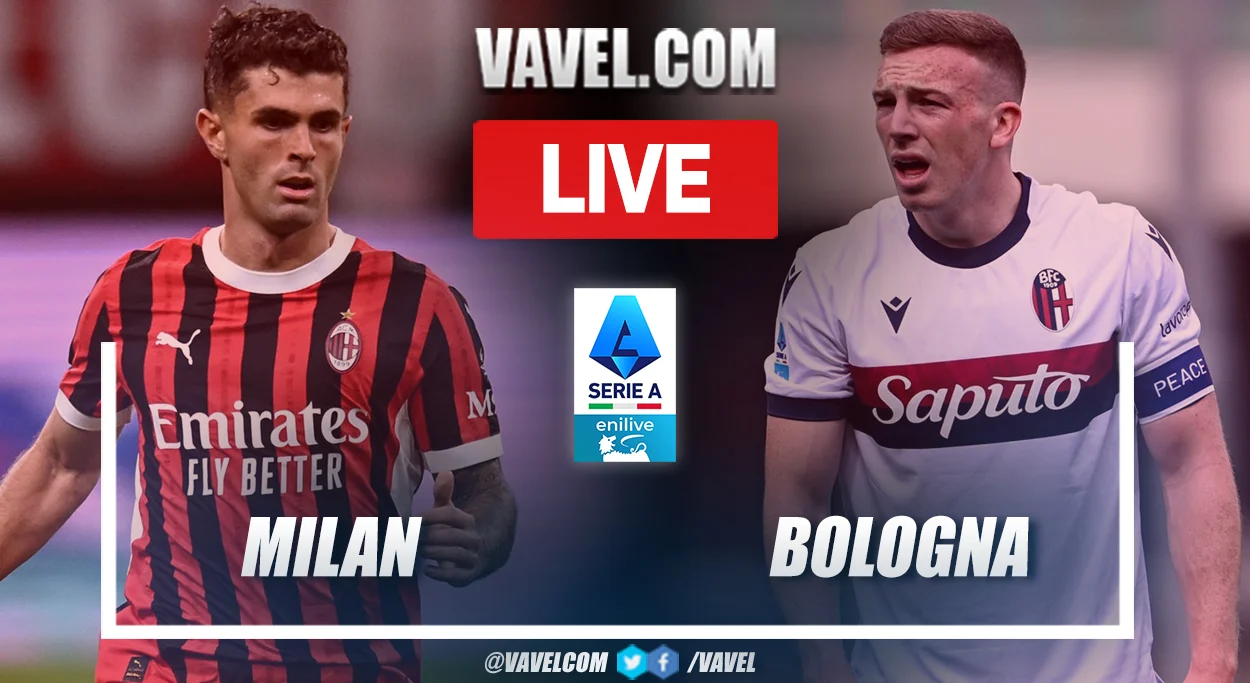
When AC Milan overturned an early deficit to beat Bologna 3-1 at San Siro on 9 May 2025, the score-line felt like more than three points. It was the last dress rehearsal before the same sides meet again in the 2025 Coppa Italia final on 14 May at Rome’s Stadio Olimpico, and the evening distilled every major storyline that now defines this pairing. From managers with radical ideas to squads that blend star power and smart scouting, Milan-Bologna has evolved from a routine league fixture into one of Italian football’s most intriguing match-ups.
A rivalry reshaped by the 2024-25 season
Both clubs entered Match-day 36 staring at very different, yet equally urgent, ambitions. Milan’s victory kept alive a late charge for a top-four finish in Serie A, crucial for Champions League revenue after an inconsistent winter. Bologna, meanwhile, are living their best domestic campaign since the 1960s: a first cup final in 51 years is already secure, and a Europa League place remains within reach if league form holds. Under the league’s new Champions League-style revenue model, either objective could change the financial complexion of the next five seasons.
Managers cut from progressive cloth
The touchline battle is compelling in its own right. Sérgio Conceição, who left Porto last summer to replace Stefano Pioli, has instilled a muscular, transition-heavy 3-4-2-1 that mirrors the sides he guided deep into European competition. After beating Bologna on Friday he reminded the press that, in finals. The team that controls fewer phases sometimes wins,” a pointed reference to Milan’s 15-minute scoring burst masking earlier sloppiness.
Opposite him stands Vincenzo Italiano, the architect of Bologna’s assertive 4-2-3-1. Recruited from Fiorentina, Italiano has persuaded the Rossoblù board to invest in ball-playing centre-backs and dynamic wingers. He was visibly furious that his team “controlled 75 minutes yet conceded three goals in a quarter-hour lapse.” The final will test whether his proactive style can withstand a Milan side built to punish over-commitment on the counter.
Flashpoints of the 3-1 rehearsal
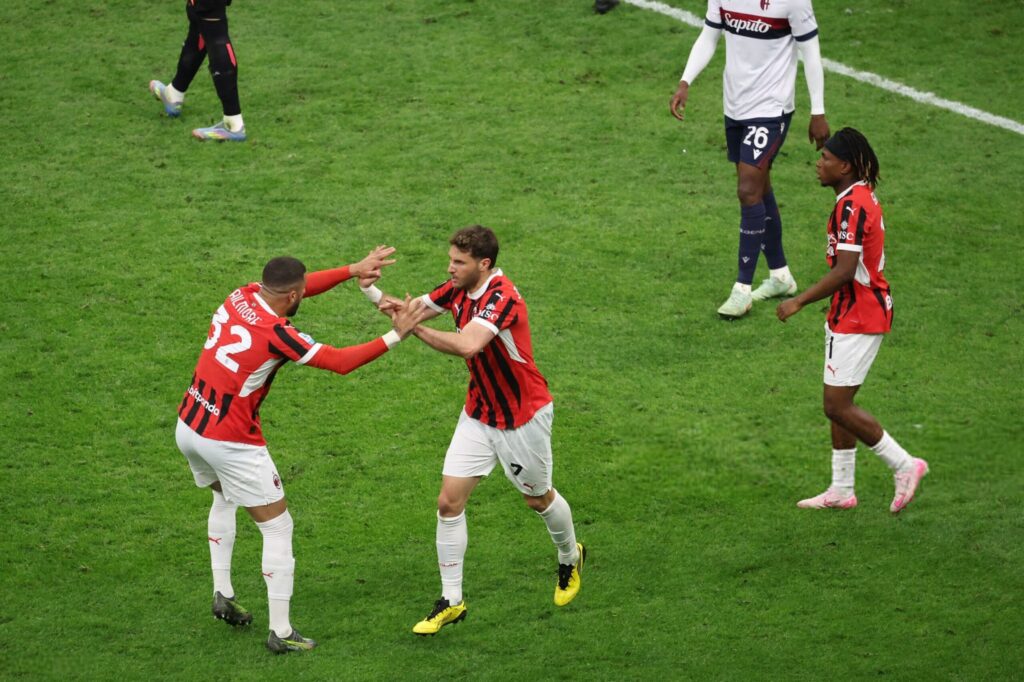
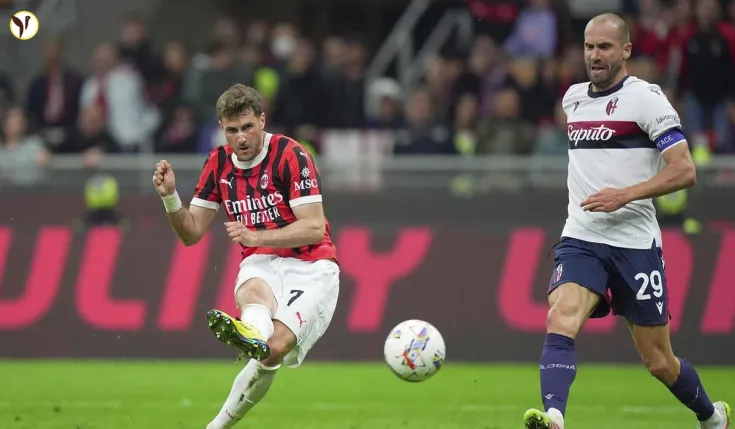
Friday’s league meeting illustrated the knife-edge nature of the contest. Bologna struck first through Swedish forward Jesper Karlsson, exploiting space behind Theo Hernández. Milan’s response hinged on the vertical runs of Christian Pulisic and the instant impact of substitute Santiago Giménez. Who combined for two goals and an assist after the 65th minute. Giménez’s near-post finish from Pulisic’s cut-back showcased Conceição’s preferred route to goal. Win the ball high, spring diagonally toward the box, and flood the six-yard area with late runners.
Yet the underlying statistics told a subtler story. Bologna attempted 16 shots to Milan’s 11 and logged more completed passes in the attacking third. Evidence that Italiano’s structure can move even elite midfielders like Tijjani Reijnders and Ruben Loftus-Cheek out of position. That imbalance is why Conceição left the post-match press conference repeating the word “correzioni” (corrections).
Head-to-head: Milan dominance tempered by recent balance
Historically the fixture is lopsided—Milan have won 24 of the last 36 league meetings since 2003, with Bologna claiming just four—but the gap has narrowed. Since Italiano’s arrival in 2023, the Rossoblù have avoided defeat in three of the previous five encounters, including a 2-2 draw at the renovated Stadio Dall’Ara in October. That mini-trend adds psychological weight: Bologna no longer travel to the fashion capital merely hoping to survive.
Milan vs Bologna Highlights
Tactical chessboard
Milan (3-4-2-1)
Strengths: fluid front three, overlapping wing-backs, set-piece variety.
Risks: space behind Hernández when he overlaps; reliance on Loftus-Cheek–Reijnders double pivot to cover vast horizontal gaps.
Bologna (4-2-3-1)
Strengths: high-line press that forces mistakes, midfield triangles built around Nicolás Domínguez and Riccardo Orsolini, late runs by free-eight Lewis Ferguson.
Risks: full-backs isolated in transition, centre-backs less comfortable chasing balls over the top.
Expect Italiano to instruct both full-backs to stagger their surges so at least three defensive players guard against Pulisic’s bursts. Conceição is likely to pull a winger—often Rafael Leão or Noah Okafor—into the half-spaces, baiting Bologna’s central defenders into decisions they dislike. The final may therefore hinge on who wins the “second ball” war around the centre circle: Milan’s physicality versus Bologna’s technician-led pressing traps.
Key players to watch
- Christian Pulisic (Milan) – With nine league goals and a reputation for clutch cup performances, the American is the conduit between midfield progression and box penetration. His goal and assist on 9 May underline growing chemistry with Giménez.
- Santiago Giménez (Milan) – January’s €35 million arrival from Feyenoord brings selfless pressing and a near-post obsession reminiscent of prime Inzaghi. Bologna’s centre-back pairing must track his front-post darts.
- Riccardo Orsolini (Bologna) – A left-footed right winger who averages 0.32 expected goals plus assists per 90, Orsolini’s ability to invert and shoot could exploit Milan’s back-three channel between Fikayo Tomori and Malick Thiaw.
- Josha Vagnoman (Bologna) – The German full-back’s overlapping discipline will be crucial in stopping Hernández; their flank duel could decide territory.
- Mike Maignan (Milan) vs Łukasz Skorupski (Bologna) – Two of Serie A’s highest post-shot xG savers. In a cup final where one lapse is fatal, goalkeeper distribution under pressure may matter as much as shot-stopping.
Intangibles: schedule, fitness, atmosphere
The final falls three days after Milan travel to Bergamo for a rearranged league match, while Bologna enjoy a full week of preparation. Conceição must juggle minutes to avoid fatigue—especially for ageing lynchpins like Olivier Giroud—without jeopardising Champions League hopes. Bologna’s medical staff are monitoring striker Joshua Zirkzee (ankle); a late clearance would add a target-man dimension they lacked at San Siro.
Atmosphere also tilts the scales. Milan will occupy the Curva Sud end of the Olimpico, renowned for choreographies that blend club iconography with Lombard folklore. Yet Bologna’s tifosi have snapped up an allotment twice the size of their average Dall’Ara crowd, eager to recreate the Red-Blue sea witnessed in the 2024 promotion play-off versus Parma’s rugby club. Cup finals are rarely neutral in Italy, and noise levels can scramble on-field communication, a problem for Italian sides reliant on high-line coordination.
Outlook
Friday’s 3-1 gives Milan psychological momentum, but the match also revealed a route for Bologna to upset the odds: accelerate through the first pressing line, force Milan’s wing-backs into deep starting positions, and finish chances before Conceição unleashes his bench. Conversely, if Milan’s physical edge turns midfield turnovers into vertical raids, Italiano’s men could find themselves in damage-control mode.
Whatever the outcome on 14 May 2025, the rivalry’s modern chapter already feels pivotal. Serie A’s changing revenue landscape rewards bold recruitment, inventive coaching, and coherent tactical identities—traits both Milan and Bologna now share. Whether the trophy ends up in the familiar Rossoneri cabinet or sparks street parties under Bologna’s Two Towers, the duel promises to push Italian football forward, one measured press and counter-press at a time.
Hi! Someone in my Myspace group shared this website with us so I came to look it over. I’m definitely loving the information. I’m book-marking and will be tweeting this to my followers! Superb blog and great design.